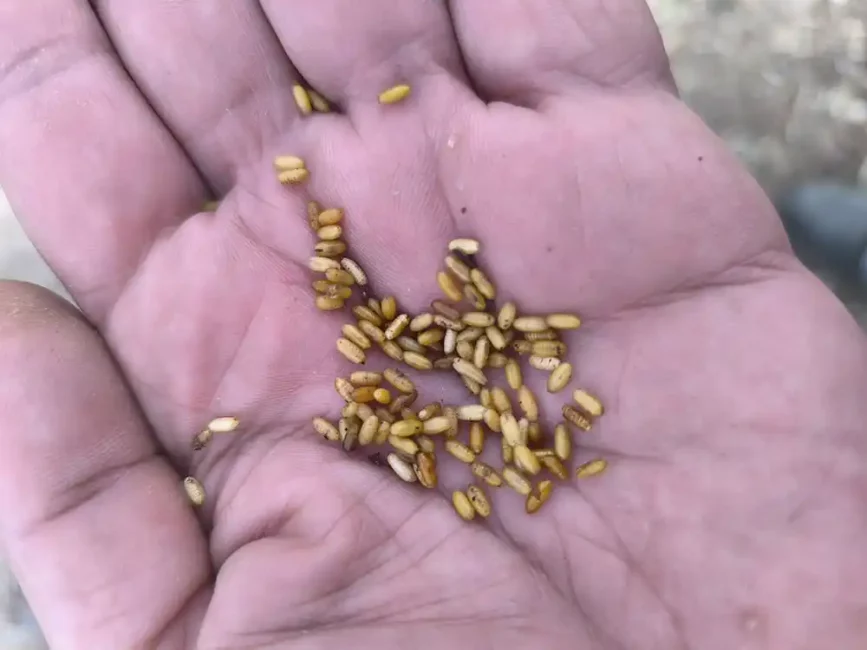
These are the larvae (mobile) and pupae (immobile) of the notorious olive fruit fly, the major pest of the olive fruit. The olive fly, a species of true fly, lays its eggs in the flesh of the olive. Once they hatch, the emerging larvae begin feeding on the pulp, carving tunnels through the fruit. The wounds and galleries created by the fly allow microbial spoilage to set in, ultimately degrading the quality of the olives.
The appearance and development of the olive fly are strongly influenced by weather conditions, especially temperature and humidity. The high temperatures and frequent rainfall of recent weeks have boosted fly populations in many regions of our country, leading to the expectation that this year’s production of extra virgin olive oil will be relatively limited.
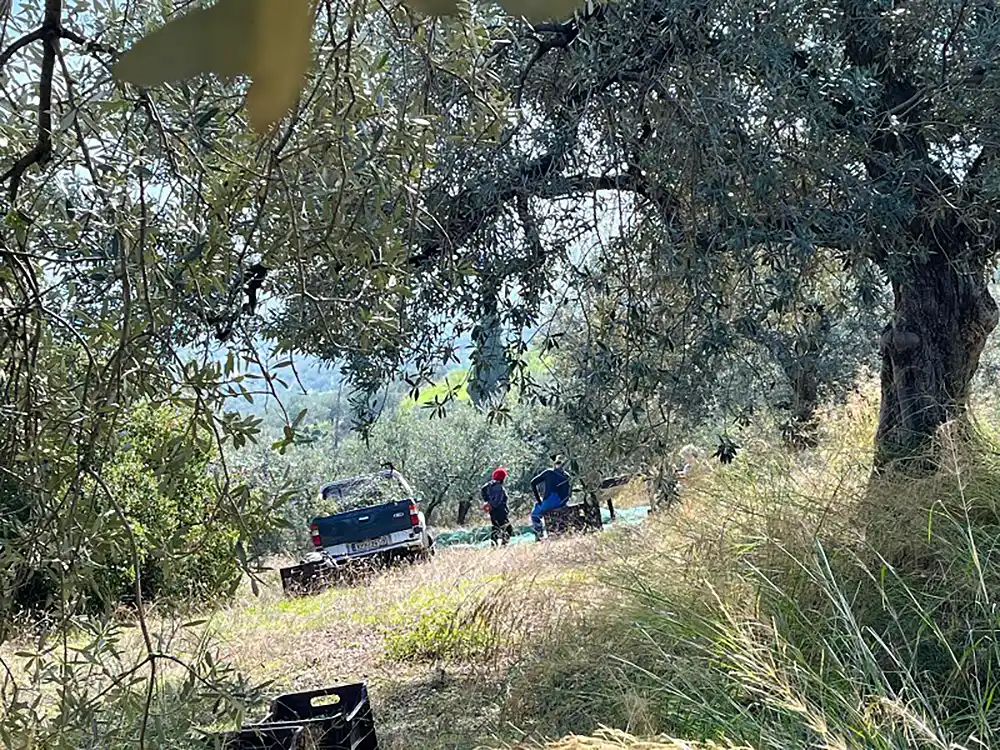
All of the above confirms our long-held insistence on early harvesting! Fortunately, with the help of the friends who joined this year’s “Harvest Days,” the project’s olive groves were picked in time, before the fly appeared and before the fruit became attractive to it. Thus, once again, our olive oil will be of exceptional quality.